
The Family Archive Checklist: 25 Things You Should Preserve Before They're Lost
- Rae Landers
- Jul 5
- 3 min read
What should you keep in a family archive?
A family archive should preserve the records, photographs, stories and keepsakes that help future generations understand who your family was—not just when people were born or where they lived.
Many families unintentionally preserve too little. Others keep everything, making it difficult to find what truly matters.
The goal isn't to save every piece of paper you've ever owned. It's to preserve the items that tell your family's story.
If you're not sure where to begin, this checklist is an excellent starting point.
Start with the irreplaceable
Some things can be replaced.
A birth certificate can often be ordered again. A newspaper article may exist in a library archive.
Others exist only once - These are the items that deserve your attention first.
Family photographs
Printed photographs, albums, negatives and slides often capture moments that exist nowhere else. Identify the people, places and approximate dates while someone still remembers them.
Home videos
Whether they're on VHS tapes, DVDs or digital files, family videos preserve movement, personality and everyday life in a way photographs cannot.
Audio recordings
Old cassette tapes, answering machine recordings, voicemails and recordings of loved ones can become some of the most treasured items in a family archive.
Handwritten letters
Letters reveal personality, relationships and history in ways few other records can.
Diaries and journals
Personal journals offer an invaluable glimpse into everyday life and the thoughts of previous generations.
Preserve the records that tell your family's story
Official documents help establish the timeline of a family's history.
Consider preserving:
Birth certificates
Marriage certificates
Death certificates
Citizenship papers
Passports
Military service records
School reports and qualifications
Apprenticeship or trade certificates
Awards and honours
Property records and significant legal documents
These documents provide important milestones and context for future generations.
Don't overlook the everyday treasures
Sometimes the most meaningful items aren't official at all.
Think about preserving:
Family recipes
Christmas cards with handwritten messages
Children's artwork
Holiday itineraries
Travel journals
Wedding invitations
Funeral service booklets
Birthday cards
Newspaper clippings
Programmes from important events
These everyday keepsakes often evoke memories that no official document ever could.
Digital memories deserve a place too
Today's family history is increasingly digital.
Without a plan, it can also disappear surprisingly quickly.
Your archive should include thoughtfully selected digital material such as:
Important digital photographs
Videos from phones and cameras
Emails with lasting significance
Digital family newsletters
Scanned documents
Recorded interviews
Voice messages
Family history research files
Digital memories deserve the same care and organisation as physical ones.
The one thing most families forget
If there is one item almost every family overlooks, it's context.
A photograph without names, a recipe you have forgotten whose handwriting it is.
A medal without an explanation. A wedding dress with no story attached.
The object survives, but the meaning doesn't. These are the items to think of.
As you organise your archive, make a habit of recording simple details such as:
Who?
What?
Where?
When?
Why did this matter?
These five questions often become the difference between an interesting object and a treasured family story.
Your family archive checklist
Use this list as a starting point.
✓ Printed photographs
✓ Digital photographs
✓ Family photo albums
✓ Negatives and slides
✓ Home videos
✓ VHS tapes
✓ Audio recordings
✓ Handwritten letters
✓ Diaries and journals
✓ Birth certificates
✓ Marriage certificates
✓ Death certificates
✓ Military records
✓ School records
✓ Awards and certificates
✓ Property documents
✓ Family recipes
✓ Children's artwork
✓ Greeting cards
✓ Newspaper clippings
✓ Wedding and funeral memorabilia
✓ Recorded family stories
✓ Important emails or digital correspondence
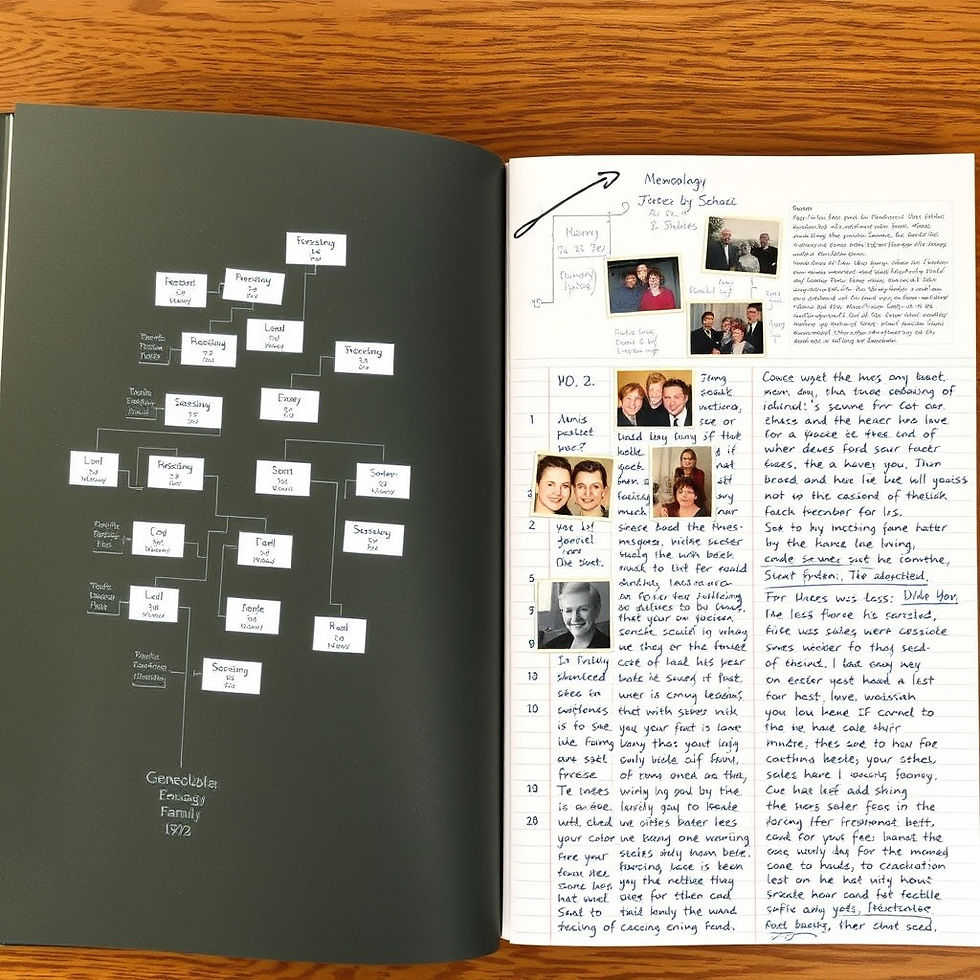
✓ Family trees and research notes
✓ Labels, captions and written explanations for everything above
Remember, you don't need to complete this checklist in a weekend. A family archive grows over time, one story and one carefully preserved item at a time.
The Archivist's takeaway
The most valuable family archives aren't necessarily the largest, they're the ones that preserve the moments, relationships and stories that would otherwise disappear.
By choosing thoughtfully, organising carefully and recording the context behind each item, you're creating something far more enduring than a collection of possessions. You're creating a legacy that future generations can understand, appreciate and continue.
At The Archivist, this checklist forms the foundation of every personal archive we help families create. It reflects a simple principle: preserve what matters, explain why it mattered, and make it accessible for those who come after you.
References & Further Reading
Best Practice Guidance on Digital Storage and Preservation | Archives New Zealand (2024)
Caring for Your Collections | National Library of New Zealand (2025)
Digital Preservation Programme | National Library of New Zealand (2025)
Preservation Digitisation Standards | National Archives of Australia (2024)
Digital Preservation Handbook | Digital Preservation Coalition (2024)

Comments