
What Is a Personal Archive? (And Why Every Family Should Have One)
- Rae Landers
- Jul 7
- 3 min read
What is a personal archive?
A personal archive is a carefully organised collection of the photographs, documents, recordings, heirlooms and stories that tell the story of a person's, or family's life.
Unlike a box of old photographs tucked away in the wardrobe or thousands of digital images scattered across phones and cloud storage, a personal archive is intentional. It preserves not only what happened, but why it mattered.
Every family already has an archive. The difference is that most are incomplete, disorganised, or slowly disappearing.
Creating a personal archive isn't about dwelling on the past. It's about making sure future generations inherit more than names and dates, they inherit the stories, values and memories that shaped the people who came before them. More than storage: preserving a family's legacy through story Many people assume preserving family history simply means keeping old photographs in albums or backing up files to the cloud.
While those are worthwhile steps, they only protect the items themselves. They don't preserve the context.
Imagine finding a photograph of two smiling people standing beside an old Holden. You might admire the image, but unless someone has recorded who they were, where they were, and why the moment mattered, much of its value is eventually lost.
A personal archive connects those pieces together.
It brings together:
Photographs and albums
Letters and postcards
Diaries and journals
Birth, marriage and military records
Certificates and awards
Home movies and VHS tapes
Audio recordings
Family recipes
Newspaper clippings
Digital photographs
Emails and digital documents
Recorded family stories and memories
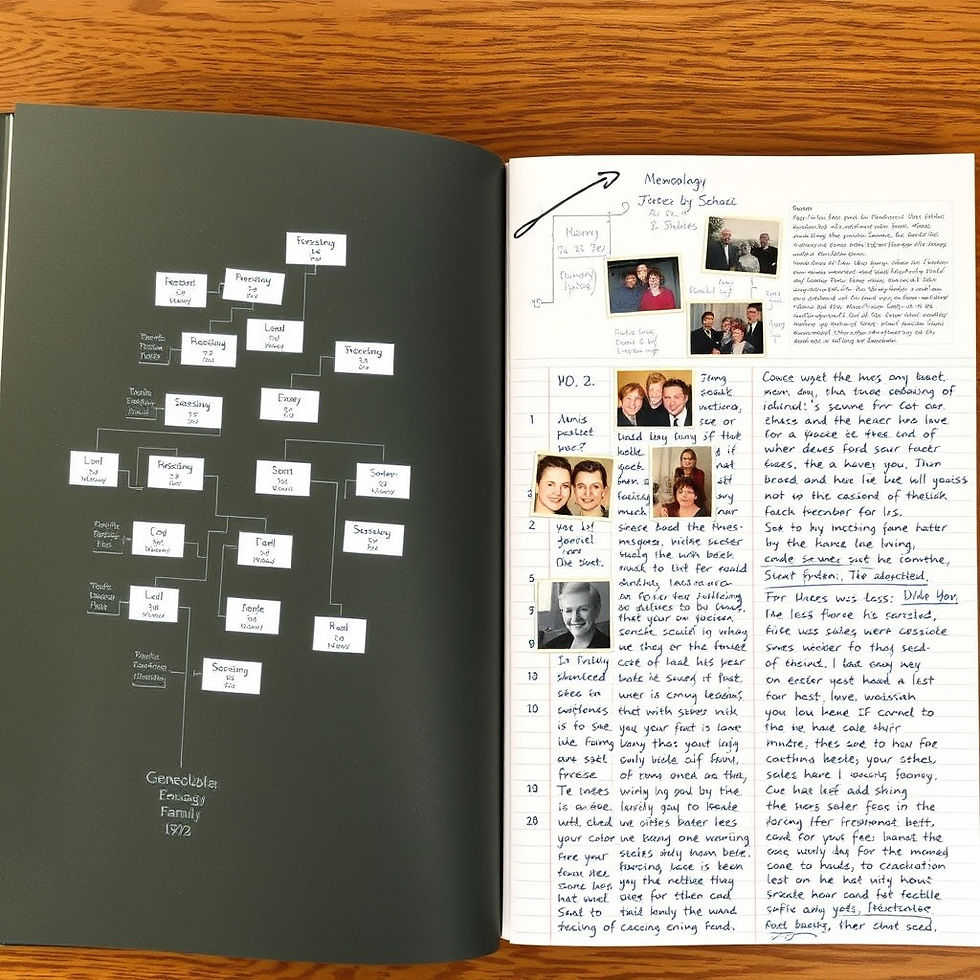
Together, these items create something far richer than a collection of objects, it paints a portrait of a history and becomes the documented story of a family, organisation, or individual life. Every generation loses part of the story
Family history rarely disappears all at once. Instead, it fades gradually.
A grandparent passes away before anyone asks about the photograph in the hallway.
Boxes are moved during a house sale.
Old computers stop working. Phones are replaced. Labels fall off. Names are forgotten.
One day, a family discovers they still have the photographs, but nobody knows who is in them.
This is one of the greatest misconceptions about family history: people think they have plenty of time.
The reality is that every year we delay, more context disappears forever.
A personal archive is different from a family tree
Family trees are wonderful tools for understanding relationships.
They answer questions like:
Who were my great-grandparents?
When did they arrive in New Zealand?
How are we related?
A personal archive answers different questions.
What kind of people were they?
What did they care about?
What was everyday life like?
What challenges did they overcome?
What stories would they want remembered?
Both are valuable, but together they create a far more complete picture of a family's history.
It isn't just about the past
One of the biggest surprises people have when creating a personal archive is discovering it isn't only about preserving old memories.
Today's photographs, text messages, videos, voice recordings and digital documents will become tomorrow's family history.
The birthday video on your phone.
The voice message from Mum.
The recipe your grandfather emailed years ago.
The family WhatsApp group.
The scanned copy of your children's artwork.
These everyday moments often become the most treasured parts of an archive because they capture ordinary life as it was actually lived.
Where should you begin?
The good news is that creating a personal archive doesn't require specialist equipment or archival training.
It begins with one simple decision:
Gather first. Organise second. Preserve third.
Start by identifying the records and memories that matter most to your family. Once everything is in one place, you can begin organising, labelling and protecting it for the future.
Perfection isn't the goal. Progress is.
Every photograph identified, every story recorded and every document preserved is another piece of your family's history that won't be lost.
The Archivist's takeaway
Every family, business, and individual, leaves behind an archive, whether they intend to or not. The question isn't whether your family's history exists. It's whether future generations will understand it.
A thoughtfully created personal archive transforms scattered memories into a lasting legacy. It preserves not only the milestones of life, but the everyday moments, voices and stories that give those milestones meaning.
At The Archivist, this philosophy guides every archive we create. By applying professional archival principles with a personal, family-centred approach, we help ensure that the stories behind your memories endure for generations to come.
References & Further Reading
Comments